
Before releasing bespoke work for production
A material approval is one part of the decision. What drawings, samples and installation details need to establish before a maker begins.

A beautiful stone surface may be approved while the supports beneath it are still unresolved. A cabinet can have an agreed finish while the maker is waiting for the lighting details. Before bespoke work goes into production, those different decisions need to be understood together.
Bespoke pieces can give a room a proportion, function or material character that a collection piece cannot offer. The final result depends on how clearly the design reaches the workshop. Once material is cut or a component manufactured, an overlooked detail may require alteration, additional cost or a compromise in the room.
Know what is ready to be made
A production release authorises a defined piece or part of the work to proceed. It should identify the current drawings and specification, the approvals already received and any information still outstanding.
The client’s approval of appearance has its own purpose. It may establish colour, texture or an overall composition. The maker also needs dimensions, construction information and the relationship to neighbouring work. A client should be able to approve the intended result without being asked to resolve specialist details outside that decision.
If only part of a package can proceed, state exactly which part. A general “approved” message can leave the maker uncertain about whether an unresolved component is included.
Shop drawings: the piece and its setting
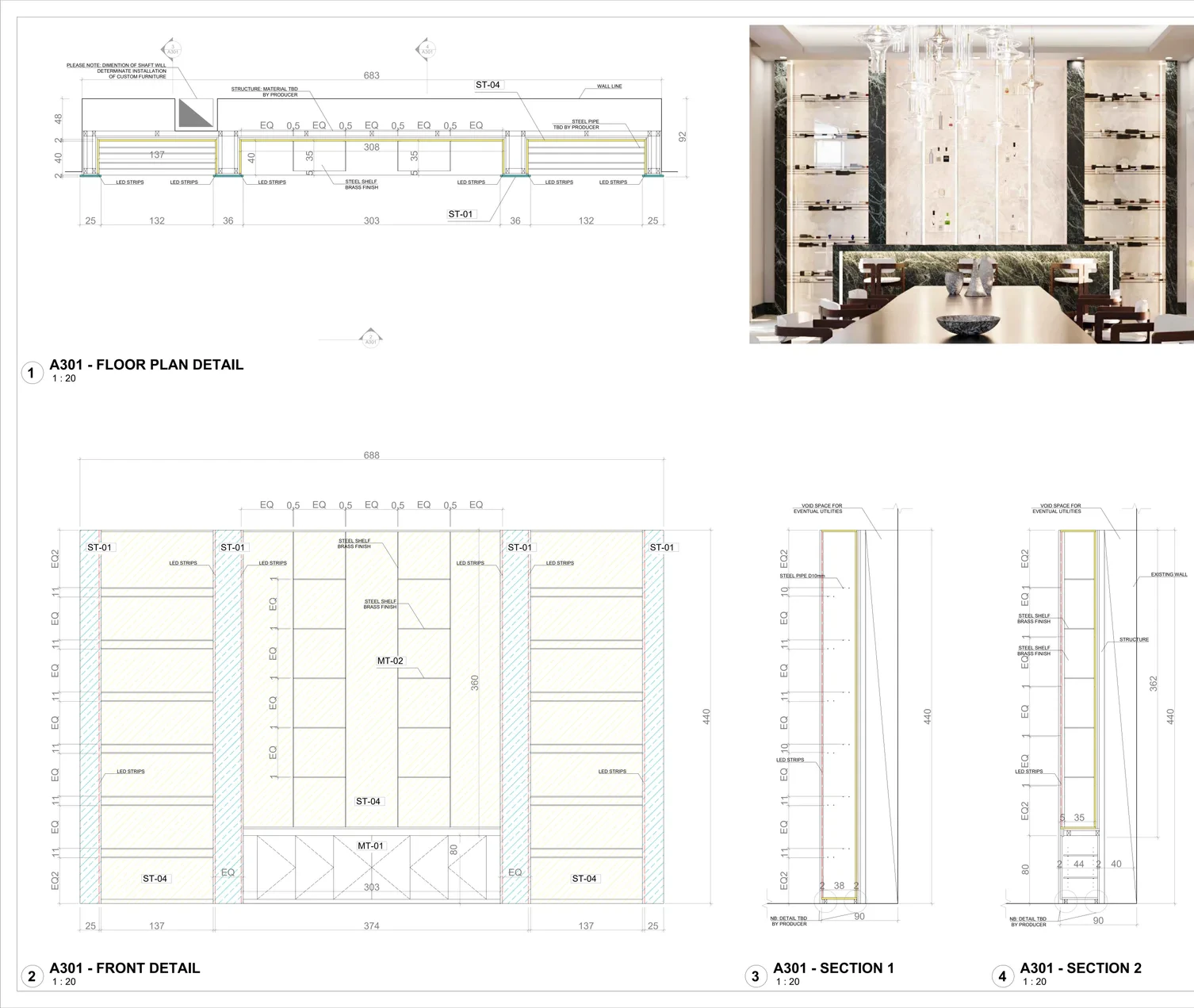
A fitted cabinet meets walls, floors and ceilings. A stone basin meets taps, drainage and surrounding finishes. The fabrication information has to develop the object in that setting, with its proportions, connections and installation understood together.
AD’s bar wall development drawing for the Phnom Penh residence illustrates what the different views contribute. The plan places the stone and shelving against the wall. The elevation gives the composition its rhythm. The sections bring brass-finished steel shelves, LED strips, stone and the space behind them into the same detail.
The drawing also identifies parts to be developed by the producer. Those notes matter: a convincing design drawing can explain the intended composition while leaving particular construction details open. Before manufacture, the maker’s shop drawings need to resolve those points for the actual materials, adjoining work and site conditions. The client’s approval of the appearance and the technical development of the assembly remain identifiable decisions.
Read the design drawing, specification, approved sample references and current shop drawings together. Changes in depth, finish or lighting position should appear consistently in that information. Where the piece meets existing work, the relevant site dimensions need confirmation before the fabrication dimensions are fixed.
Consider delivery in the same review. A piece drawn as one object may need to enter through a stair or lift before reaching its room. The maker and installation team need an agreed route and, where applicable, an assembly sequence.
Ask samples a specific question
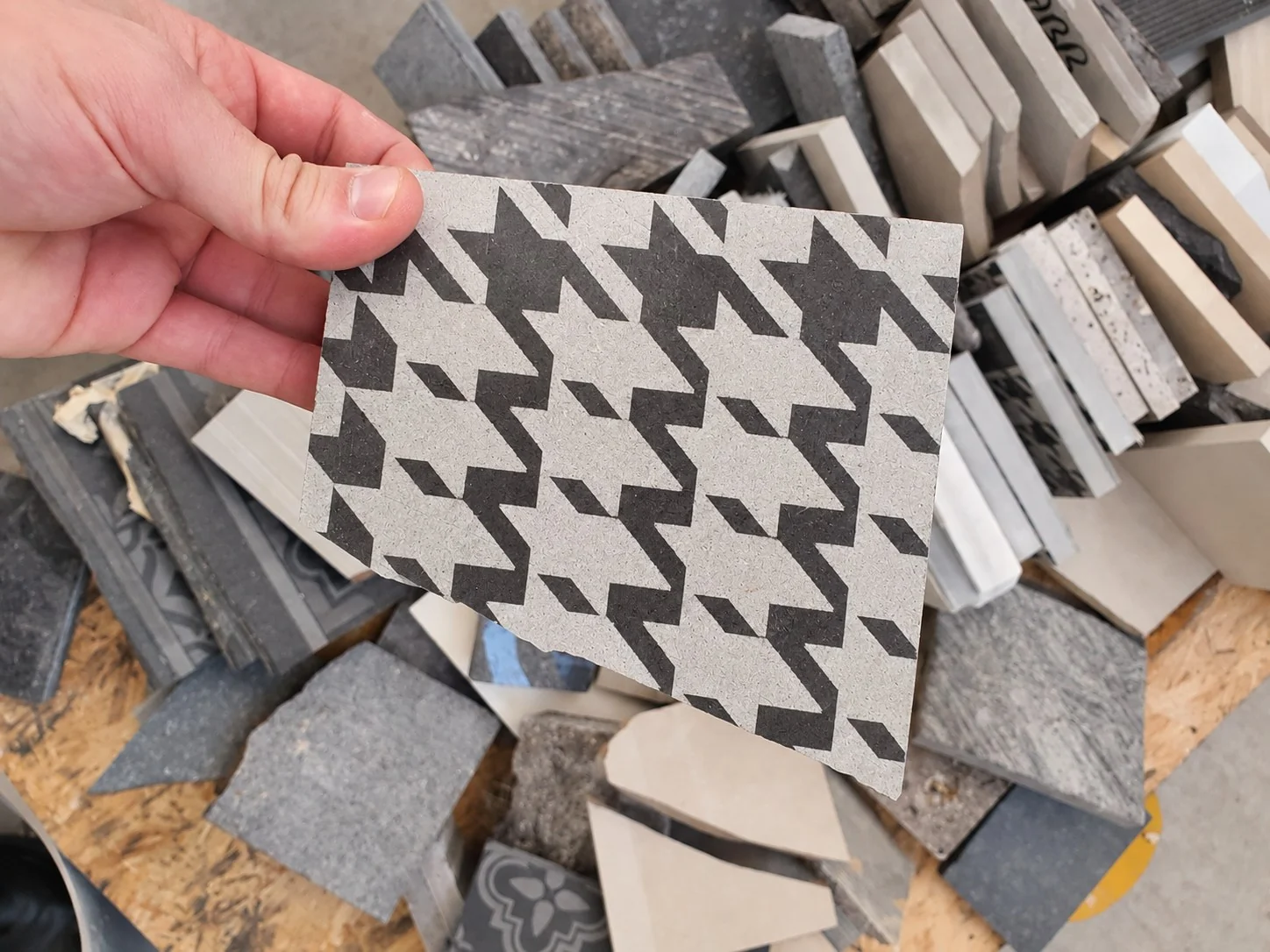
A sample becomes useful when it shows the feature being decided. A finish sample introduces colour and texture. A worked edge, an upholstered corner or a junction between two materials needs a sample at the scale at which that detail will be seen and touched. Choose the sample around the design decision.
At Hotel Eden Spa, the illuminated glass shelving was assembled and lit in the workshop before installation. The worked glass edge and lighting could be seen together while the object was accessible. That gave the intended effect a physical reference, beyond a material name or a line on a drawing.
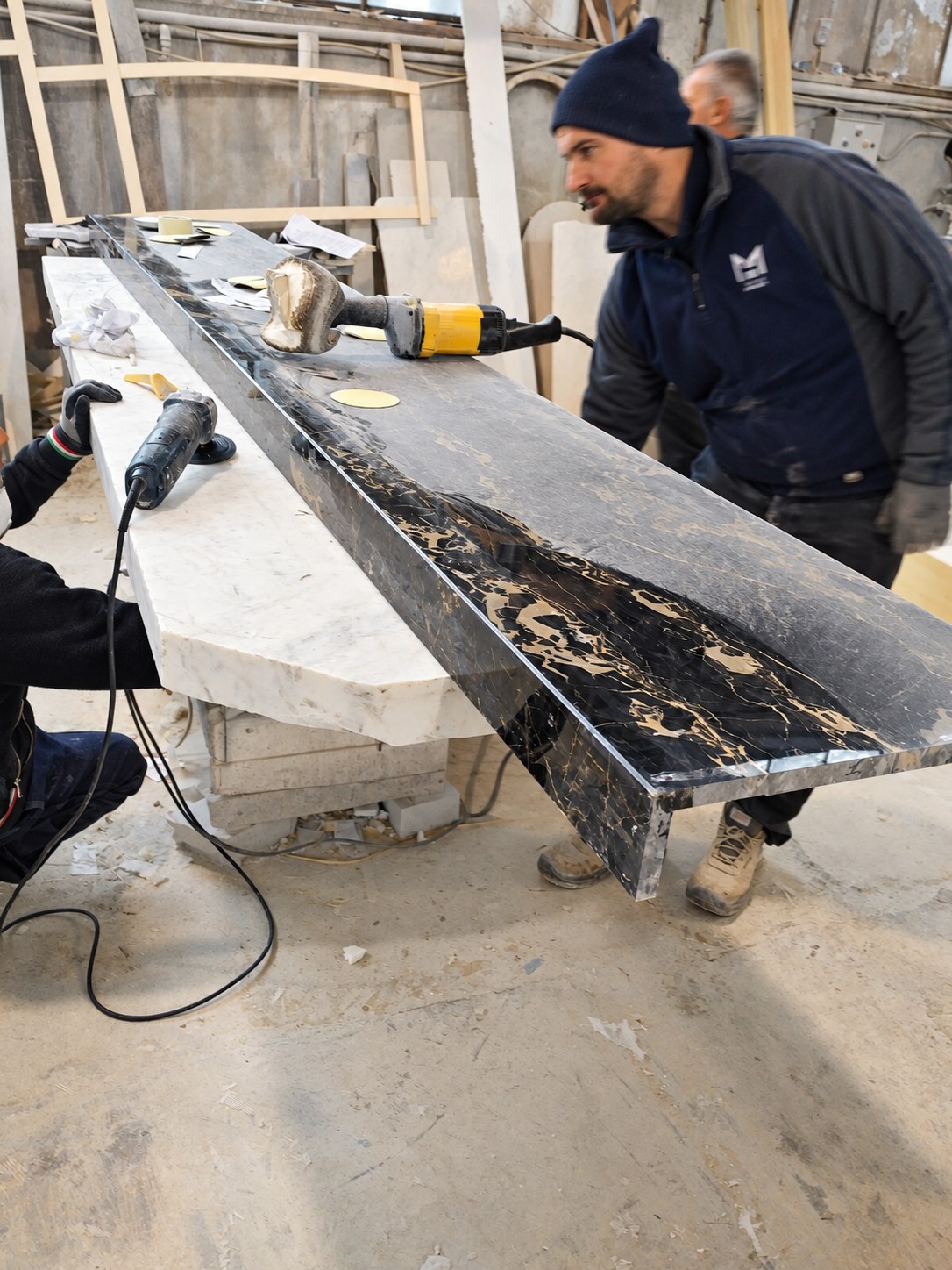
At Sikder Haus, the bespoke Portoro basin was designed and commissioned for handwashing in the dining area. Its workshop and installed views allow the carved bowl and tall body to be studied first as an object, then beside the fittings and surrounding finishes. A small stone sample could introduce the colour and polish; it could not represent the whole form.
For a new commission, bring the sample back to the room. Consider the height at which it will be viewed, the light falling on it and the adjoining material. Record the particular reference being approved so the maker and client can return to the same physical decision as the detail develops.
Make a technical comment easy to act on
Take an illustrative cabinet with integrated lighting: the drawing shows a closed back but no route to replace the LED driver. The question affects both maintenance and the finished appearance of the cabinet.
A useful comment would read: “Show the access panel and confirm how the LED driver can be replaced after installation. Coordinate the panel with the rear finish and adjacent shelving before releasing this detail for manufacture.” Add the drawing number, revision, responsible party and required response date.
This is an example of a review question, not a reported defect on an AD’ project. Its value lies in asking for a definite response that can be checked before the affected work proceeds. The appointed specialists remain responsible for developing and verifying their respective details.
Give the workshop a clear instruction
Before release, the agreed information should identify the piece to be made, its current specification, the approvals it relies on and any limitations. The maker needs to know which drawings and samples govern the work and who confirms a proposed change.
If a junction or component remains unresolved, keep that status visible and decide whether other work can proceed independently. Once the answer is received, check the revised information against the original question. A comment marked closed is useful only when the affected detail has actually been addressed.
When an independent review helps
A focused review can be useful when manufacture is approaching and the owner or project team needs a second examination of a defined package. The scope should state what information will be checked, what deliverables will be provided and how comments return to the appointed designers and suppliers.
AD’s Technical & Project Review can examine agreed drawings, details and specialist connections before tender or production. If a piece is approaching manufacture, discuss it with the studio. Describe the decision ahead and its timing; any current drawings can help establish what the review should cover.