
A Portoro marble basin, made for its place in the room
A handwashing point in the dining area at Sikder Haus became a freestanding piece carved from solid stone.
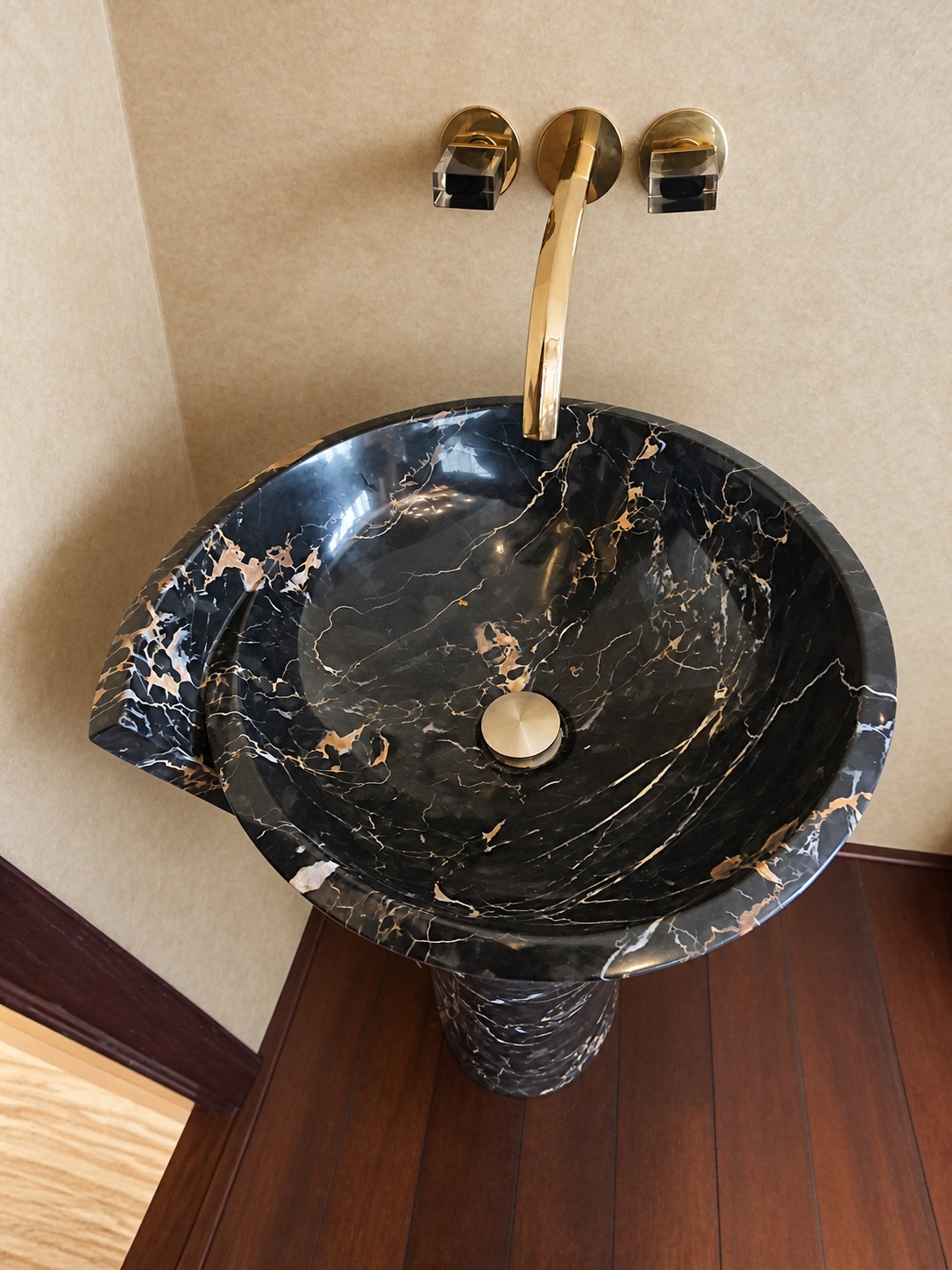
At Sikder Haus in Dhaka, a place to wash hands was part of the dining setting. AD’ Design Studio designed and commissioned a freestanding Portoro basin for that use, giving a practical object a sculptural presence within the dining setting.
The workshop views, the finished piece protected in a timber crate and the completed installation document successive stages of the same commission. The article follows those stages through the object’s form, material and position in the room.
A useful object with a sculptural presence
The tall body and integrated bowl were carved from solid Portoro marble. The dark stone and lighter veining continue over the form, giving the basin an identity that comes from both its outline and the material itself.
The completed installation pairs it with Fantini fittings. Seen together, the basin, tap and surrounding wall make a small architectural composition. A handwashing point is part of the room’s life, so its position matters alongside the pleasure of looking at the stone.
What the workshop view reveals
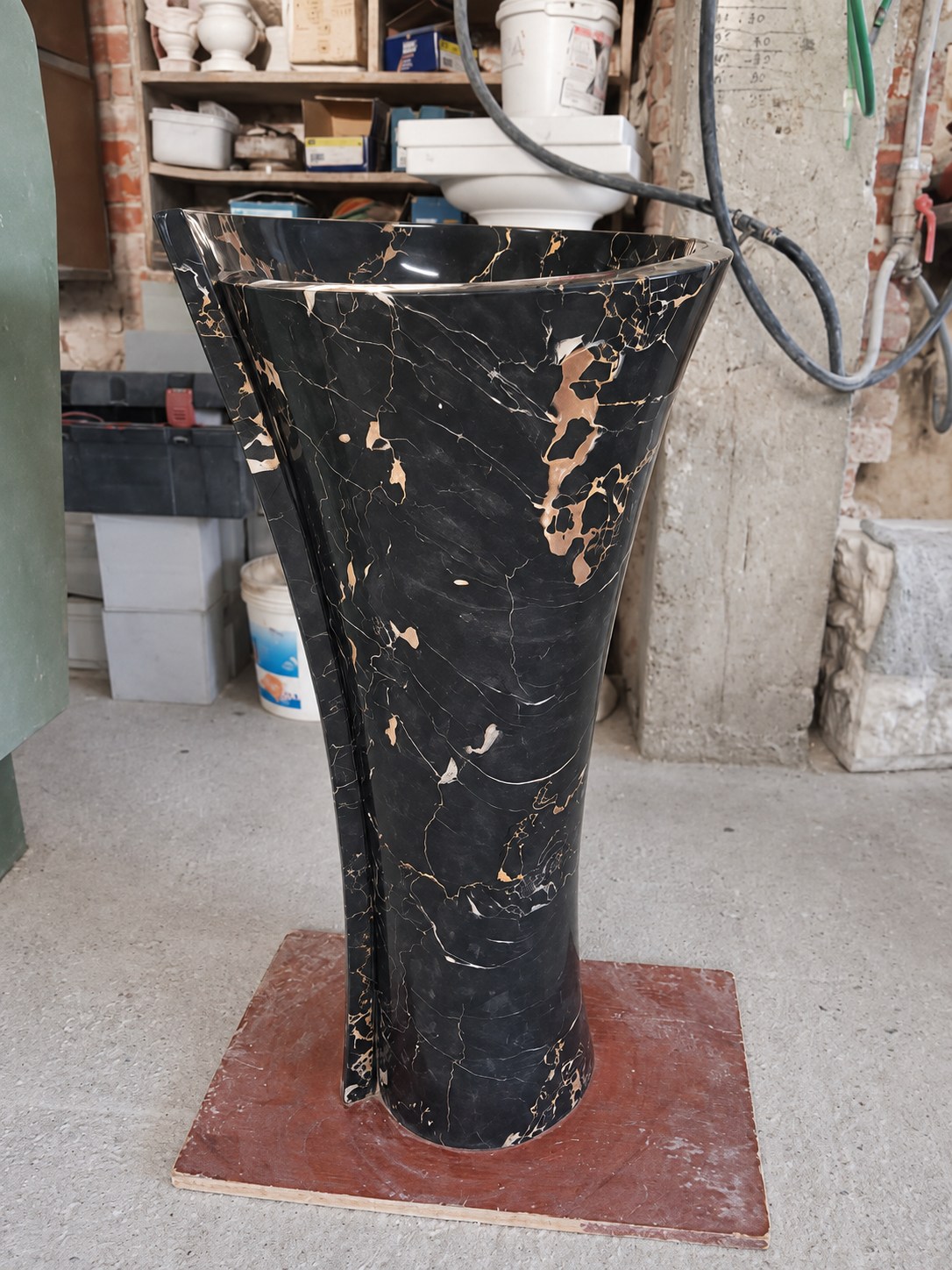
Without the finished interior around it, the workshop view makes the form easier to study. The bowl, body and exposed surfaces can be read as one piece. It is a useful way to look at bespoke work: first understand the object, then see how it belongs to the setting.
For a similar commission, the outside profile and bowl geometry have to be coordinated with fittings, drainage and the junction with the floor. Dimensions, tolerances and openings need to be clear in the information supplied to the maker.
Choosing stone for a whole form
A small sample introduces colour and finish. A carved object has a much larger visible surface and its own distribution of veins. Considering the material at that scale, with the maker, helps reveal how the visible faces will give the form its character.
This gives the client a clearer understanding of what is being commissioned. The aim is to appreciate the particular stone and its variation, with an agreed form and finish, before fabrication begins. The wider marble sourcing guide explores this process for surfaces and bespoke pieces.
From a made object to an installed one
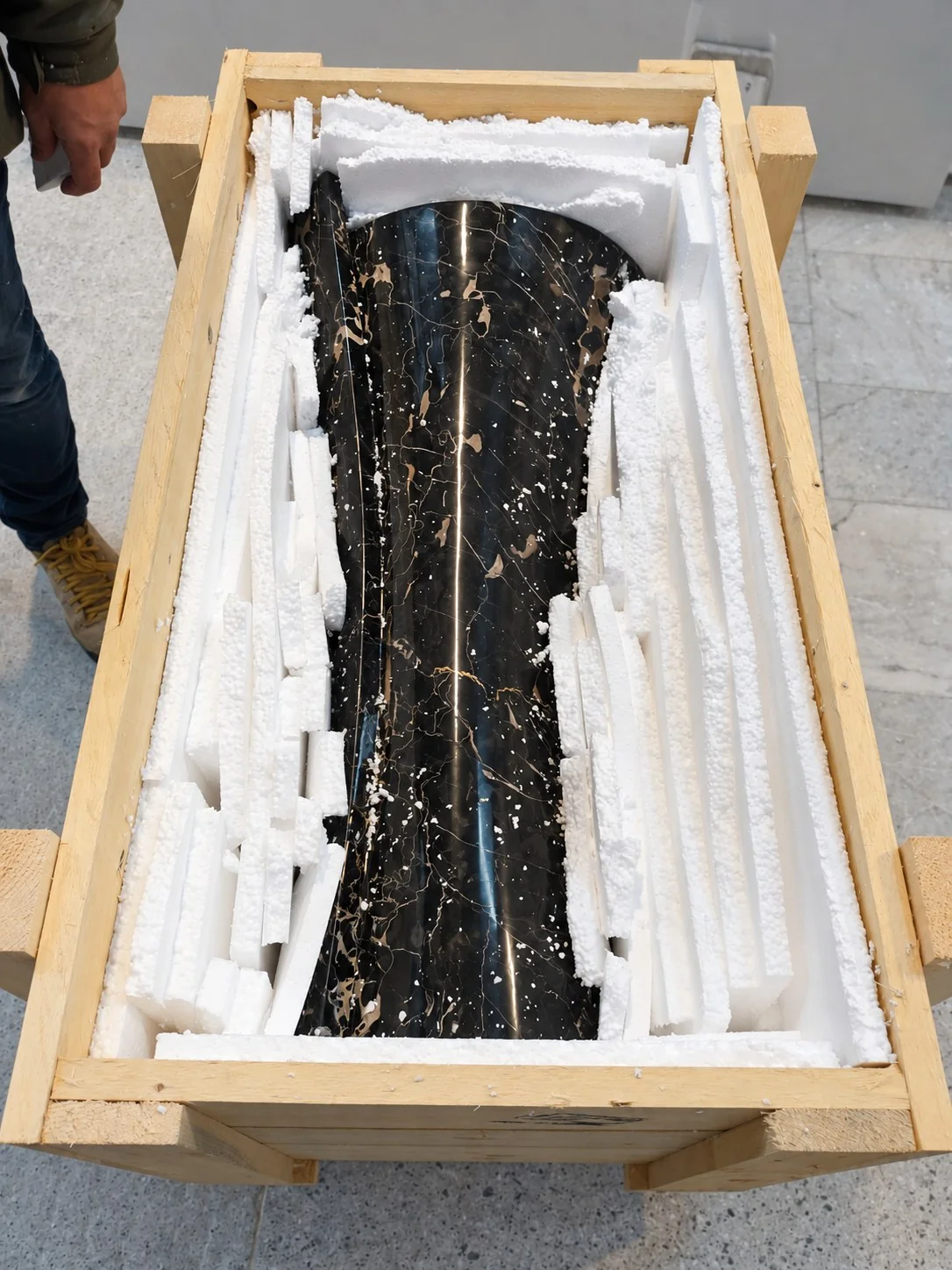
The view of the crated basin adds an easily overlooked part of the story. The basin leaves the workshop as a finished stone object; it still has to reach its final position and meet the services prepared for it.
For a freestanding piece, the route into the room matters before it leaves the workshop. The maker and installers need to agree how it will be protected, moved into position and connected. Those preparations allow the receiving team to work with the finished object as intended.
When a room calls for a commission
The Portoro basin gives a specific use a specific form. It is a reason to consider bespoke work when a catalogue piece does not answer the location, proportions or material character of the interior.
AD’ develops bespoke stone pieces within complete interior design appointments and for defined commissions alongside an existing team. To discuss a bespoke piece, share the intended use, the setting and the material under consideration. Drawings or photographs provide a useful starting point; the scope can then be agreed through Furnishing & Procurement.