
Sourcing Italian marble for a bespoke interior
Choosing the stone is also choosing its movement, its finish and the way it meets the room.
A small marble sample can be enough to start a conversation. It is rarely enough to imagine a whole wall, a dining table or a carved basin. The larger piece has its own pattern, and that pattern becomes part of the interior.
For a prominent wall or table, the stone’s movement is part of the composition. A quiet slab and a strongly veined slab can make the same drawing feel like two different interiors. Sourcing therefore begins with the effect the room needs and continues through the particular material that will be cut.
Decide what the stone should do in the room
A reception front may need a presence from across the room. A vanity is seen and touched at close range. A dining table has to live comfortably with chairs, lighting and the objects placed on it. These are different briefs, even when the proposed material is the same.
Consider the stone beside its neighbours. Timber can bring warmth to a dark surface; metal can draw attention to an edge; light can make a polished finish read very differently from a matt one. The sample becomes useful when it is seen within that relationship.
Daily use also matters. Marble can be marked by acidic substances, including lemon juice and some cleaning products. A protective treatment does not make a surface stain-proof. Before choosing a dining top or vanity, ask the supplier which care routine and treatment suit the actual stone and finish. The Natural Stone Institute’s care guidance explains those distinctions.
Consider how you want the surface to look after it has been used. Some owners enjoy small signs of daily life; others want a finish that stays visually consistent. Explain that preference before selecting the stone, so appearance, use and care can be considered together.
Select the particular material
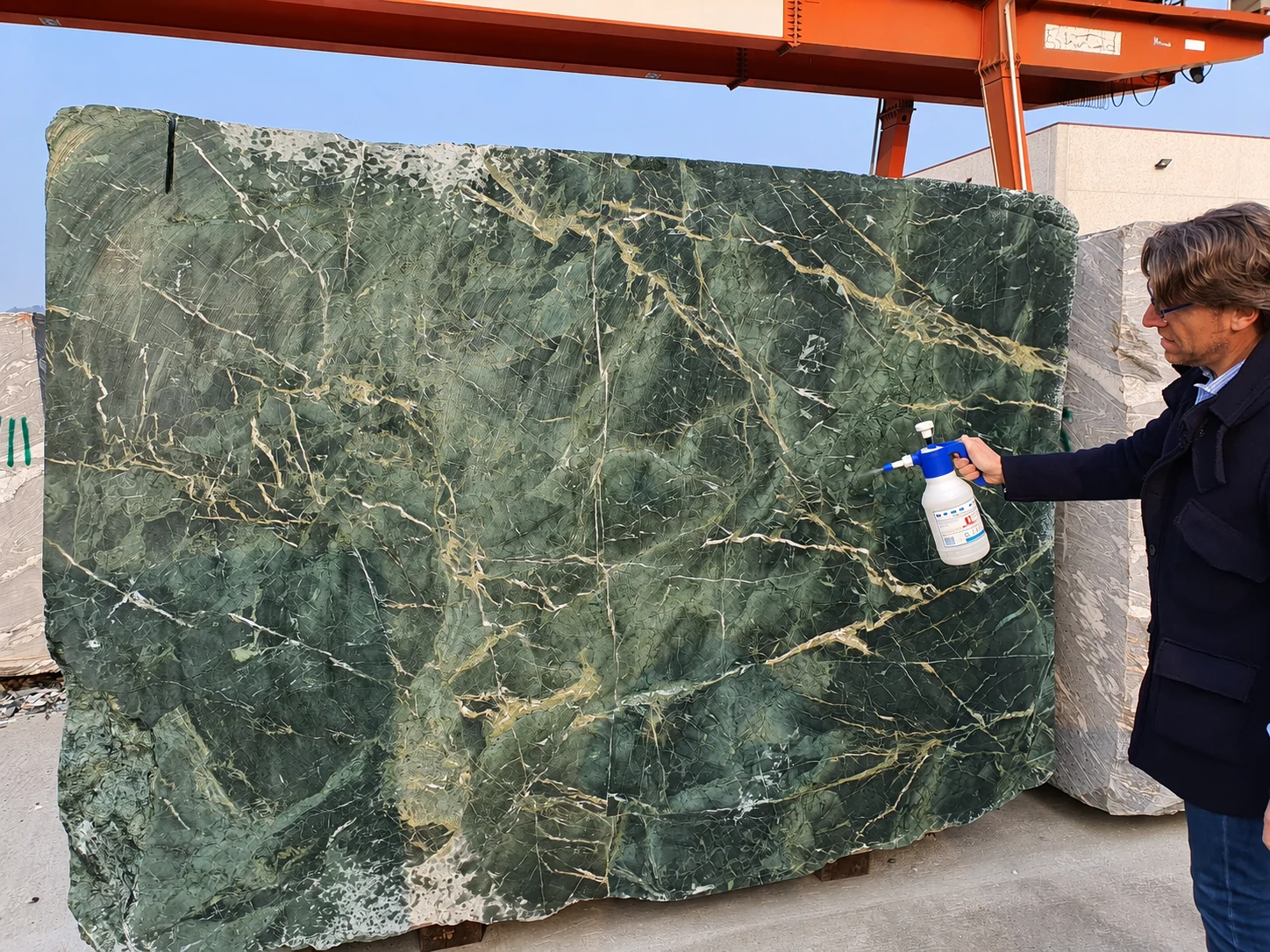
Natural variation is one of marble’s attractions. It also means that a small sample cannot stand for every slab carrying the same name. Review the actual material proposed for purchase, especially where its pattern will be a defining part of the interior.
Photographs and video can help an international client take part in selection when the slab or block shown is clearly identified. A physical inspection or additional sample may be useful where colour, finish or pattern remains difficult to judge. Keeping the selected references with the drawings connects that visual choice to the material the maker will work.
“Italian marble” also needs a clear meaning in the quotation. Stone origin and the location of fabrication are separate facts. If Italian origin is part of the brief, ask for it to be identified explicitly; an Italian workshop may work materials from elsewhere.
Compose the surface before it is cut
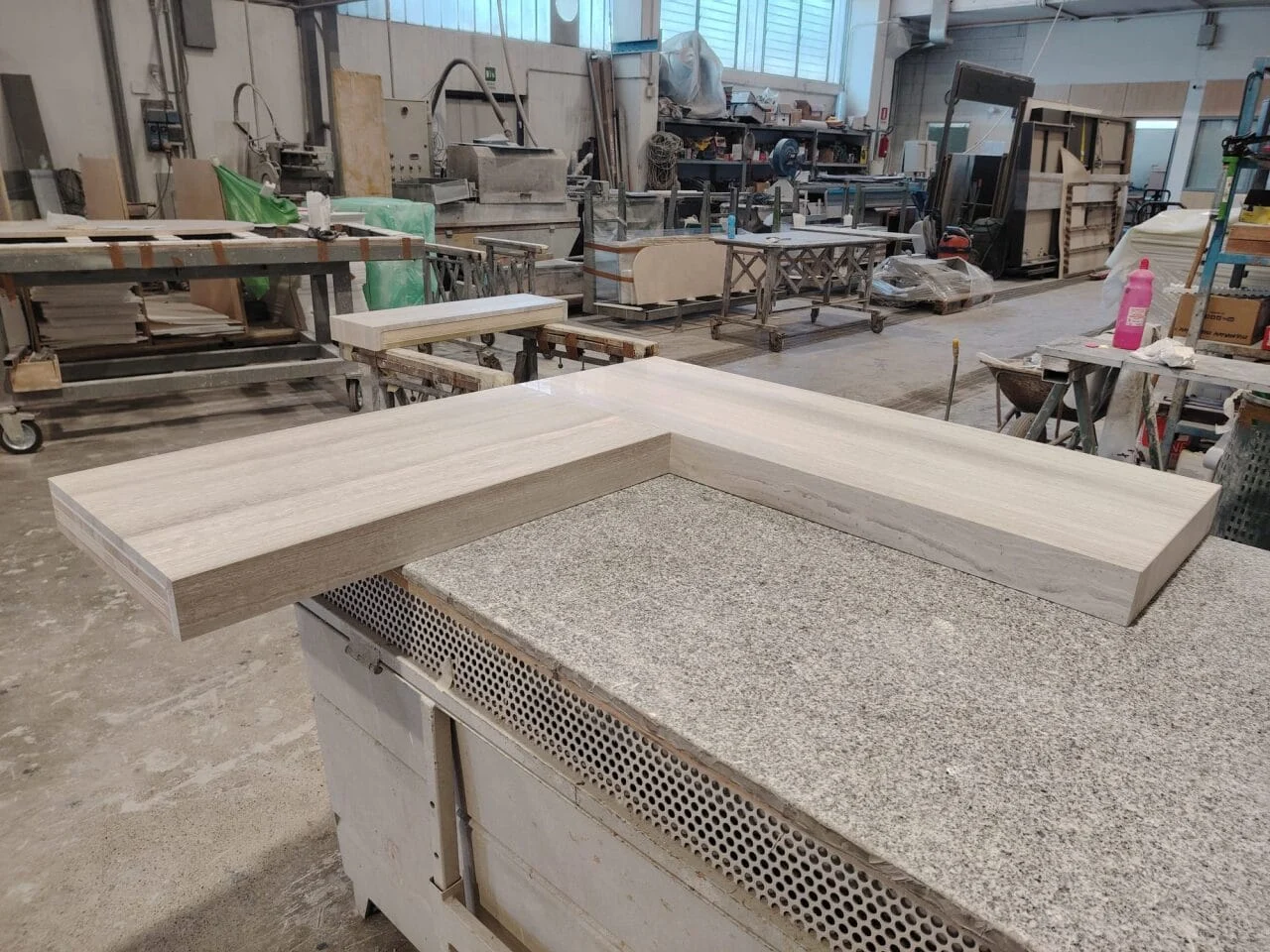
The direction of the pattern, the position of a joint and the way stone turns a corner can change the finished surface. The designer and maker develop a cutting layout showing how the vein passes across neighbouring pieces and where it is interrupted. That lets you consider the composition from across the room as well as the detail seen close up.
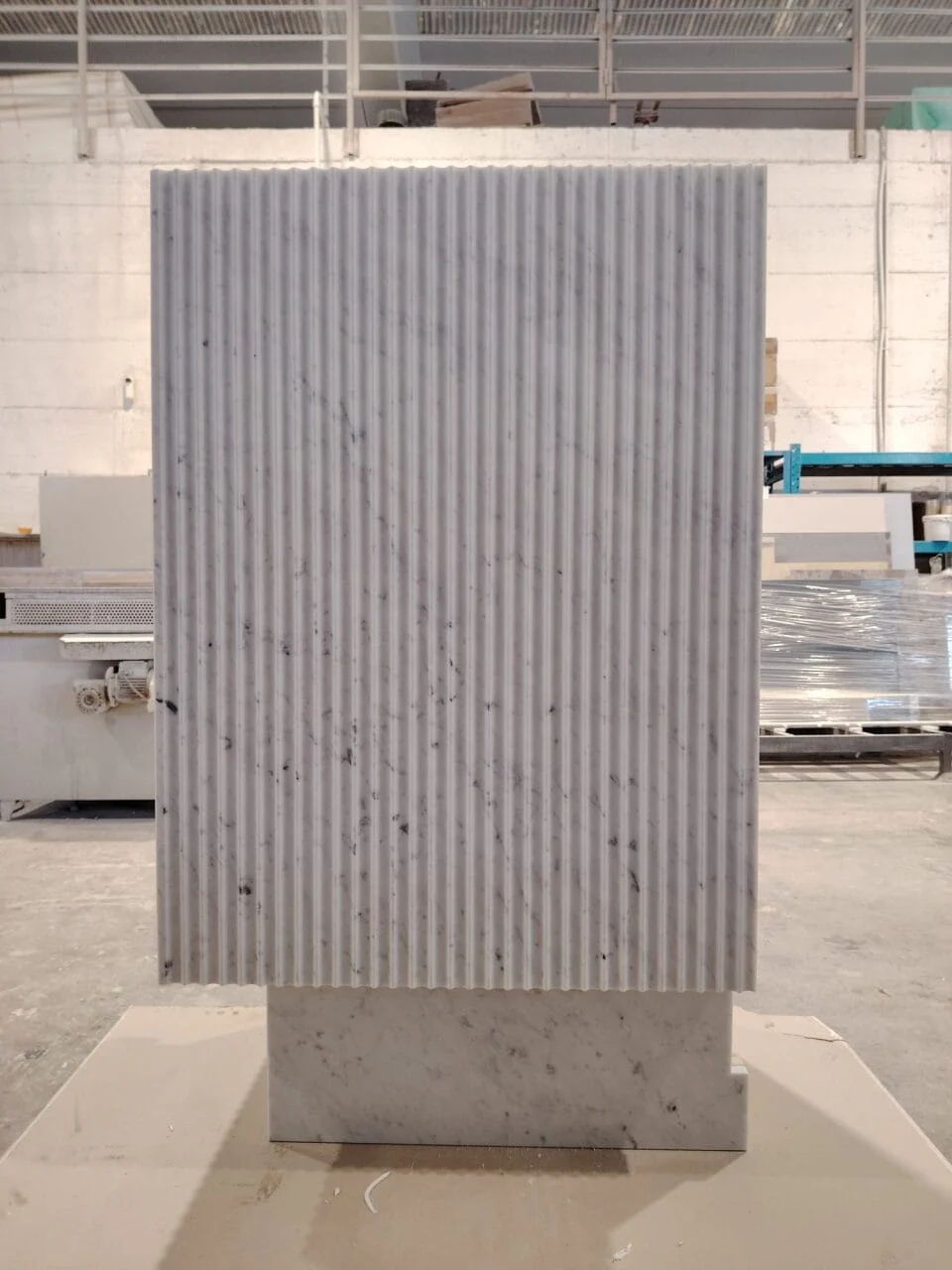
A broad, flat face lets the pattern lead. Fluting introduces a second rhythm: the repeated grooves and the light across them become part of the design. At a corner, the two faces are seen together. The designer develops that meeting before the pieces are cut, so you can judge how the pattern, grooves and light will belong to the whole form.
At Hotel Eden Spa, the workshop views show a fluted marble front and a stone corner assembly developed within AD’ Design Studio’s Spa interior design and bespoke development commission. The made pieces offer a way to judge the depth, surface and junction beside the drawings. For a similar detail, view a relevant sample or assembly in light that helps you understand the proposed effect; the maker must establish how it can be fabricated and supported.
Keep the selected material and its intended use together:
| Decision | What to identify before fabrication |
|---|---|
| The material | The selected slab or block references, its proposed finish and the areas of natural variation to retain. |
| The composition | The cutting layout, vein direction, joints and the position of the visible pieces. |
| The form | Finished dimensions, edges, fluting and openings for fittings or adjoining work. |
| The connections | The details to resolve with the maker and the team responsible for support, fixing and installation. |
Agree which drawings, samples or workshop views will support the decision. The maker and appointed specialists need to resolve the technical details for the actual stone, form and intended use.
Bring the shape and the fittings together
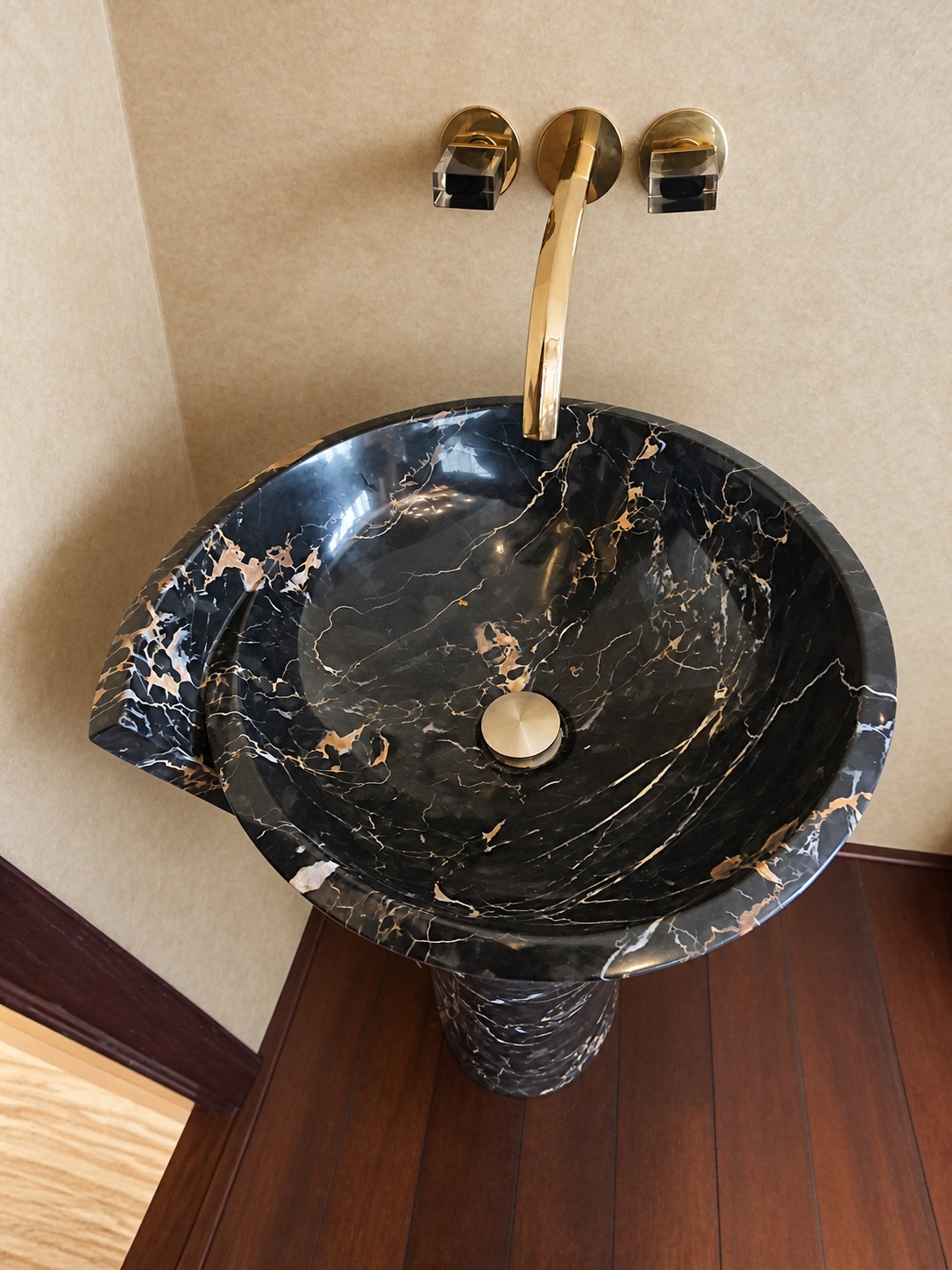
A slab wall and a carved basin ask different things of the stone. On the wall, the pattern travels across a broad face. On a freestanding basin, it wraps a body that will be seen from several directions. The bowl, edge and outer form need to belong to the same object.
The Portoro basin at Sikder Haus was designed and commissioned by AD’ for the dining area, carved from solid Portoro and paired with Fantini fittings. Its position brings the basin into the dining composition. The shape and proportions therefore matter from the room’s principal views as well as from the position of someone using it.
For a proposed basin, drawings bring its form and fittings into the same view. The designer considers where the water arrives, how the controls are reached and what the person approaching will see. The maker and plumbing specialists confirm the openings and connections for the selected fittings. You can judge the object as a whole while those details are developed before manufacture.
The same approach applies where stone meets joinery, metal or light. A coordinated detail shows the neighbouring elements together, including the material and the edge you will encounter at close range.
Compare the whole commission
A quotation for fabricated stone delivered to a property covers a different commission from a quotation for material alone. Comparing the scope makes the remaining work and cost visible. The client also needs to know who places the order and approves the stone, drawings and any later changes.
For a project abroad, the route to the final room deserves attention before dispatch. Packing, handling, access and the receiving team’s preparations are part of bringing a made object safely into its setting. The requirements depend on the piece; they should be agreed with the parties responsible.
Related projects and guides
Hotel Eden Spa: interiors and bespoke development ↗A Portoro basin, from brief to installation ↗Before releasing bespoke work for production ↗
AD’ designs bespoke stonework and sources marble from Italy within complete interior appointments or an agreed Furnishing & Procurement package, purchasing on the client’s behalf. A first conversation can start with plans or photographs, the intended use and the material that has caught your attention. Discuss a marble project with the studio.